
"coffee chemicals"
9000 article(s) found
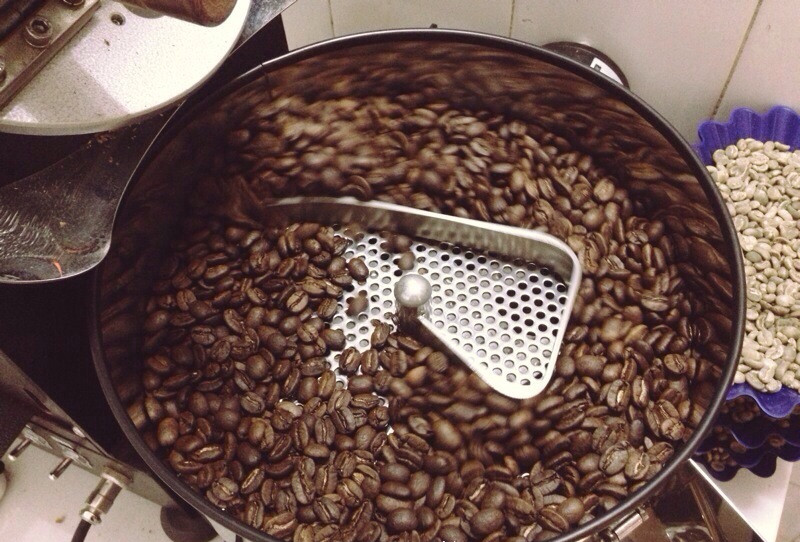
Basic chemical reactions of coffee beans during coffee roasting
Many thermal and chemical reactions take place during baking: decarbonation, dehydration of quinic acid, subdivision, isomerization, polymerization, and complex sugar reactions (caramelization). The main components of the thermal reaction are monosaccharides and sucrose, chlorogenic acid, free amino acids, and fenugreek amide. Both aravinose and calactose in the polysaccharides are transferred, and the basic vulcanization process includes hydroxylamine.
The basic chemical reactions that take place during coffee roasting
Many thermal and chemical reactions take place during baking: decarbonation, dehydration of quinic acid, subdivision, isomerization, polymerization, and complex sugar reactions (caramelization). The main components of the thermal reaction are monosaccharides and sucrose, chlorogenic acid, free amino acids, and fenugreek amide. Both aravinose and calactose in the polysaccharides are transferred, and the basic vulcanization process includes hydroxylamine.

What chemical reaction happens when milk becomes foam? How does milk become foam?
Professional coffee knowledge exchange More coffee bean information Please pay attention to coffee workshop (Weixin Official Accounts cafe_style) Although you don't need a degree in chemistry, it is indeed a more complicated technology to understand the chemical effect of milk on coffee. But if you want to make perfect, beautiful foam, you have to learn about milk. Milk goes with it.
The basic chemical reactions that take place during coffee roasting.
Many thermal and chemical reactions take place during baking: decarbonation, dehydration of quinic acid, subdivision, isomerization, polymerization, and complex sugar reactions (caramelization). The main components of the thermal reaction are monosaccharides and sucrose, chlorogenic acid, free amino acids, and fenugreek amide. Both aravinose and calactose in the polysaccharides are transferred, and the basic vulcanization process includes hydroxylamine.

What are organic coffee beans?
In many parts of the world, growers use pesticides to control the growth of coffee pests, and moist and foggy coffee at high altitudes are more vulnerable to fungi, so growers often use pesticides to treat them. Many people believe that coffee can be called organic coffee as long as synthetic pesticides, herbicides and chemical fertilizers are not used during coffee growth. in fact, it is only in third parties (except coffee makers and producers).

What is organic coffee beans Organic Coffee organic coffee
In many parts of the world, growers use pesticides to control the growth of coffee pests, and moist and foggy coffee at high altitudes are more vulnerable to fungi, so growers often use pesticides to treat them. Many people believe that coffee can be called organic coffee as long as synthetic pesticides, herbicides and chemical fertilizers are not used during coffee growth. in fact, it is only in third parties (except coffee makers and producers).

The flavor characteristics of coffee are actually the products of a chemical compound. Where does the aroma of coffee come from?
There are too many factors in coffee that can affect coffee flavor: variety, baking methods, brewing methods, treatment methods. However, when you start to analyze it, the flavor characteristics of coffee are actually a product of chemical compounds. Of course, these compounds are affected by the way we roast coffee, the type of coffee, and the height at which we plant it. But if we really want to optimize,

Brief introduction of organic coffee beans three famous coffee beans
Introduction to organic coffee beans in many parts of the world, growers use pesticides to control the growth of coffee pests, and moist and foggy coffee at high elevations are more vulnerable to pests, so growers often use pesticides to treat them. Many people think that coffee can be called organic coffee beans as long as synthetic pesticides, herbicides and chemical fertilizers are not used during coffee growth. in fact, only in third parties.

Professional coffee roasting| Is the natural curve of baked beans coincidence or science?
Professional barista communication, please pay attention to coffee workshop (Weixin Official Accounts cafe_style) Using the open source free baking record software Artisan not only allows us to focus on the process of baking beans, but also adds a lot of unexpected ideas, or fun, I don't understand why some people resist it so much. In Germany 2015 SCAE baking contest page last there is one
Treatment of decaffeinated coffee beans
At present, there are three ways to remove caffeine from coffee beans:
The basic chemical reaction of coffee technology in the process of coffee roasting
Many thermal and chemical reactions take place during baking: decarbonation, dehydration of quinic acid, subdivision, isomerization, polymerization, and complex sugar reactions (caramelization). The main components of the thermal reaction are monosaccharides and sucrose, chlorogenic acid, free amino acids, and fenugreek amide. Both aravinose and calactose in the polysaccharides are transferred, and the basic vulcanization process includes hydroxylamine.

Water content and Chemical changes during Coffee roasting
The water content and chemical changes in the baking process of caffeine, whether new or old beans, have its unique baking curve, so it is necessary to accurately judge the bean and the time of emergence, and master the best flavor. In the process of recording the baking curve, carefully blindly test each batch of baked beans, record them, and accurately grasp the key elements, you can easily get the taste of coffee beans! Remember

Experts from the American Chemical Society have pointed out that hot coffee contains more antioxidants than cold extracted coffee.
Cold-extracted coffee is one of the most popular coffee drinks in recent years, but most people do not know enough about cold-extracted coffee. Recently, scientists have found that coffee extracted by hot and cold methods contains very different antioxidant health ingredients. Recently, the researchers involved in the study made progress on the SciMetting platform of the American Chemical Society (ACS).
Boutique Coffee explains what Organic Coffee beans are
In many parts of the world, growers use pesticides to control the growth of coffee pests, and moist and foggy coffee at high altitudes are more vulnerable to fungi, so growers often use pesticides to treat them. Many people believe that coffee can be called organic coffee as long as synthetic pesticides, herbicides and chemical fertilizers are not used during coffee growth. in fact, it is only in third parties (except coffee makers and producers).
Fine coffee learn what organic coffee beans are.
In many parts of the world, growers use pesticides to control the growth of coffee pests, and moist and foggy coffee at high altitudes are more vulnerable to fungi, so growers often use pesticides to treat them. Many people believe that coffee can be called organic coffee as long as synthetic pesticides, herbicides and chemical fertilizers are not used during coffee growth. in fact, it is only in third parties (except coffee makers and producers).

The basic Chemical reaction of Coffee Baking process
Original: Basic Chemical Reactions Occurring in the Roasting Process by Carl Staub sourced from the SCAA Roast Color Classification System developed by Agtron-SCAA in 1995 Many thermal and chemical reactions occur during the roasting proces

Coffee Basics Chemical Reaction of Coffee in Roasting
Coffee has a wide variety of flavors. Different regions, different altitudes, different climates, different origins of coffee production have their own unique characteristics, green beans are fresh and completely without the usual coffee taste; coffee taste comes from proper roasting, showing fruity (medium light roast) or caramel sweet (deep roast). The lighter the roast, the more sour the taste.

Chemical reaction of Fine Coffee in roasting
Coffee has a rich, wide range of flavors. Coffee produced in different regions, different elevations, different climates and different producing areas has its own unique characteristics. Raw beans are fragrant and have no usual coffee taste at all; the taste of coffee comes from proper roasting. Show fruity (light roasting) or caramel sweetness (deep roasting). The lighter the baking, the more sour it tastes. Baking.

What are the characteristics of organic coffee beans
In many parts of the world, growers use pesticides to control the growth of coffee pests, and moist and foggy coffee at high altitudes are more vulnerable to fungi, so growers often use pesticides to treat them. Many people believe that coffee can be called organic coffee as long as synthetic pesticides, herbicides and chemical fertilizers are not used during coffee growth. in fact, it is only in third parties (except coffee makers and producers).

Chemical reaction and temperature during coffee roasting changes of reactive substances in coffee roasting process
Professional coffee knowledge exchange more coffee bean information please follow the coffee workshop (Wechat official account cafe_style) professional coffee roasting | coffee roasting is too complicated? A picture teaches you how the baking process reacts to the chemical composition of the baking. Sucrose: melting point 187.8 ℃-sugar? Complex = caramelization-water CO2 escapes to produce an explosive First Crack phenomenon. I'm in the roaster.